|
Silt
From Wikipedia, the free encyclopedia
Jump to: navigation, search
For other uses, see Silt (disambiguation).
Silt is soil or rock derived granular material of a specific grain size. Silt may occur as a soil or alternatively as suspended sediment in a water column of any surface water body. It may also exist as deposition soil at the bottom of a water body.
Silt is generated by a variety of modi capable of breaking and splitting up generally sand-sized quartz crystals of primary rocks by exploiting deficiencies in their lattice[1]. These involve chemical weathering of rock[2] and regolith, and a number of physical weathering processes such as frost shattering[3] and haloclasty[4]. However, it is mainly by abrasion through transport-processes such as fluvial comminution, aeolian attrition and glacial grinding [5] most effectively operating in semi-arid environments [6] that substantial quantities of silt are produced. Silt is sometimes known as 'rock flour' or 'stone dust', especially when produced by glacial action. Mineralogically, silt is composed mainly of quartz and feldspar. Sedimentary rock composed mainly of silt is known as siltstone.
[edit] Grain size criteria
In the Udden-Wentworth scale (due to Krumbein), silt particles range between 1⁄256 and 1⁄16 mm (3.9 to 62.5 μm), larger than clay but smaller than a sand. In actuality, silt is chemically distinct from clay, and unlike clay, grains of silt are approximately the same size in all dimensions; furthermore, their size ranges overlap. According to the USDA Soil Texture Classification system, the sand-silt distinction is made at the 0.05 mm particle size.[7] The USDA system has been adopted by the Food and Agriculture Organization (FAO). In the Unified Soil Classification System (USCS) and the AASHTO Soil Classification system, the sand-silt distinction is made at the 0.075 mm particle size (i.e. material passing the #200 sieve). Silts and clays are distinguished by their plasticity.
Silt can occur as a deposit or as material transported by a stream or by a current in the ocean. Silt is easily transported in water and is fine enough to be carried long distances by air as 'dust'. Thick deposits of silty material resulting from aeolian deposition are often called loess (a German term) or limon (French). Silt and clay contribute to turbidity in water.
The main cause of river siltation is erosion from extensive plowing of farm fields, clearcut logging or slash and burn treatment of tropical forests. When the total ground surface is stripped of vegetation, the upper soils are vulnerable to both wind and water erosion. In a number of regions of the earth, entire sectors of a country have been rendered unproductive; for example, on the Madagascar high central plateau, comprising approximately ten percent of that country's land area, virtually the entire landscape is sterile of vegetation, with gully erosive furrows typically in excess of 50 meters deep and one kilometer wide. Shifting cultivation is a farming system which sometimes incorporates the slash and burn method in some regions of the world. The resulting sediment load can cause extensive fish kills, hampering economic development.
Silt, deposited by annual floods along the Nile River, created the rich and fertile soil that sustained the ancient Egyptian civilization. This silt was depended on for this purpose. A decrease in silt deposited by the Mississippi River throughout the 20th century due to a system of levees has contributed to the disappearance of protective wetlands and barrier islands in the delta region surrounding New Orleans.[1]
_________________
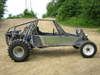
Water cooled Dry Sumped Subaru Powered Turbo Charged Fuel Injected 2500CC Tank. Oh Rah! He who dies with the most Toys not only wins, He also wears them out!
|
 Login
Login FAQ
FAQ Search